KOLKATA: Hindustan Copper Ltd on Saturday registered a 32 per cent decline in its net profit to Rs 60.97 crore in the Q4 period ended March 2011 over the corresponding period last year.
The turnover was also down by 30.38 per cent during the quarter to Rs 285.25 crore in comparison to the corresponding period previous year, the company said.
Speaking to reporters, HCL chairman and managing director Shakeel Ahmed said the delay of the proposed FPO would not impact the ongoing expansion projects.
"There is no need for funds for the next two years as we can manage from internal accruals," he said.
HCL failed to appoint five independent directors on the board, a pre-requisite for a company to hit the capital market.
HCL said the company is facing an investment gap of Rs 207 crore to implement the investment plan of Rs 3,677 crore by 2017.
The company said out of seven projects, six projects would be finalised by June.
The capacity by 2017 was expected to rise to 12.4 million tonne from 3.47 million tonne now if all projects sailed smooth.
Saturday, May 28, 2011

EBay, PayPal sue Google, execs over trade secrets

NEW YORK: EBay and its online payment unit, PayPal, on Thursday sued Google and two executives for stealing trade secrets related to mobile payment systems.
The two executives, Osama Bedier and Stephanie Tilenius, were formerly with Pay-Pal and led the launch of Google's own mobile payment system in partnership with MasterCard, Citigroup and phone company Sprint on Thursday.
The suit highlights the growing battle by a wide range of companies from traditional finance to Silicon Valley trying to take a major stake in what has been described as a $1 trillion opportunity in mobile payments. The mobile phone is seen as the digital personal wallet of the future.
The eBay suit said Bedier worked for nine years at Pay-Pal, most recently serving as vice-president of platform, mobile and new ventures. He joined Google on January 24 this year.
Tilenius was at eBay from 2001 to October 2009 and served as a consultant to the company until March 2010. The suit says Tilenius joined Google in February 2010 as vice-president of e-commerce.
Bedier is accused in the suit of having "misappropriated PayPal trade secrets by disclosing them within Google and to major retailers".
The suit accused Tilenius of recruiting Bedier, thereby breaking a contractual agreement with eBay. It also claims Bedier attempted to recruit former colleagues still at PayPal.
Ebay said PayPal and Google worked closely together for three years until this year on developing a commercial deal where PayPal would serve as a payment option for mobile application purchases on Google's Android phones.
It said Bedier was the senior PayPal executive leading and finalizing negotiations with Google on Android during this period.
It also claimed Bedier transferred up-to-date versions of documents outlining PayPal's mobile payment strategies to his non-PayPal computer just days before leaving PayPal for Google.
"By hiring Bedier, with his trade secret knowledge of PayPal's plans and understanding of Google's weaknesses as viewed by the industry leader (PayPal), Google bought the most comprehensive and sophisticated critique of its own problems available," the suit said.
Google spokesman Aaron Zamost said the company had not yet received a copy of the complaint would not be able to comment until it has had a chance to review it.
Google and PayPal have battled in the recent past in online payments via computers with the launch of Google Checkout in 2006, but Checkout has had a minimal impact on PayPal's market dominance.
The two executives, Osama Bedier and Stephanie Tilenius, were formerly with Pay-Pal and led the launch of Google's own mobile payment system in partnership with MasterCard, Citigroup and phone company Sprint on Thursday.
The suit highlights the growing battle by a wide range of companies from traditional finance to Silicon Valley trying to take a major stake in what has been described as a $1 trillion opportunity in mobile payments. The mobile phone is seen as the digital personal wallet of the future.
The eBay suit said Bedier worked for nine years at Pay-Pal, most recently serving as vice-president of platform, mobile and new ventures. He joined Google on January 24 this year.
Tilenius was at eBay from 2001 to October 2009 and served as a consultant to the company until March 2010. The suit says Tilenius joined Google in February 2010 as vice-president of e-commerce.
Bedier is accused in the suit of having "misappropriated PayPal trade secrets by disclosing them within Google and to major retailers".
The suit accused Tilenius of recruiting Bedier, thereby breaking a contractual agreement with eBay. It also claims Bedier attempted to recruit former colleagues still at PayPal.
Ebay said PayPal and Google worked closely together for three years until this year on developing a commercial deal where PayPal would serve as a payment option for mobile application purchases on Google's Android phones.
It said Bedier was the senior PayPal executive leading and finalizing negotiations with Google on Android during this period.
It also claimed Bedier transferred up-to-date versions of documents outlining PayPal's mobile payment strategies to his non-PayPal computer just days before leaving PayPal for Google.
"By hiring Bedier, with his trade secret knowledge of PayPal's plans and understanding of Google's weaknesses as viewed by the industry leader (PayPal), Google bought the most comprehensive and sophisticated critique of its own problems available," the suit said.
Google spokesman Aaron Zamost said the company had not yet received a copy of the complaint would not be able to comment until it has had a chance to review it.
Google and PayPal have battled in the recent past in online payments via computers with the launch of Google Checkout in 2006, but Checkout has had a minimal impact on PayPal's market dominance.
US says China yuan undervalued, but not manipulated
 WASHINGTON: The US treasury department ruled on Friday China was not manipulating its currency to gain an unfair trade advantage, but said Beijing still needs to allow the yuan to rise much faster in value.
Although the Obama administration has often used blunt language to warn China over its currency practices, the semiannual report issued by treasury on Friday maintained its practice of avoiding the harsher step of naming it a currency manipulator.
The department said it concluded China did not meet the US legal definition of a currency manipulator due to the appreciation of its currency -- known as the yuan or renminbi -- since June 2010 and recent Chinese statements that it would continue to promote exchange rate flexibility.
But a number of factors, including China's continued rapid accumulation of dollar reserves and a projected widening of its current account surplus, "all indicate that the real effective exchange rate of the renminbi remains substantially undervalued," the department said.
"Treasury's view ... is that progress thus far is insufficient and that more rapid progress is needed," the department said in the report.
The report had originally been due on April 15 but was delayed ahead of a key meeting with senior Chinese officials in Washington earlier this month. China says it is moving to revalue the yuan, but will proceed at its own pace.
The yuan closed at 6.4917 to the dollar on Friday, little changed on the day, but up 5.15 percent since it was loosened from a peg to the dollar in June 2010.
Treasury's decision came as no surprise, even though the US trade gap with China hit a record $273 billion in 2010.
President Barack Obama's Democratic administration has declined to name China as a currency manipulator in five consecutive reports now, following the pattern set by the Republican administration of former President George W. Bush.
Many US lawmakers and import-sensitive manufacturers, such as steel and textiles, claim that China's currency is undervalued by as much as 40 percent, giving Chinese companies an unfair price advantage in international trade.
But Erin Ennis, vice president of the US-China Business Council, which represents roughly 230 American companies that do business in China, said Treasury made the right call.
"While USCBC has advocated repeatedly that China should allow its exchange rate to better reflect market forces, designating China as a 'manipulator' would achieve nothing," Ennis said.
Congress has threatened for years to pass legislation to pressure China to revalue its currency, but so far no bill has reached the president's desk.
Commerce secretary Gary Locke, tapped to be the next US envoy to China, told the Senate Foreign Relations Committee on Thursday that a more flexible Chinese currency was key to US-China economic rebalancing.
"We are seeing movement on the currency," he said, referring to a roughly 5 percent increase since China slightly loosened the yuan peg to the dollar in June 2010.
"We believe it should float more and faster," Locke said. By preventing the yuan from rising more rapidly, China imposes an unfair burden on other emerging economies with more flexible exchange rates and eliminates a tool it could be using to counter domestic inflation, treasury said.
Derek Scissors, a research fellow with the Heritage Foundation, said he agreed with treasury's decision not to cite China because it should be focused on other Chinese policies that are much more damaging to the United States.
However, the department has turned the report into a "minor joke" by repeatedly delaying its release, he said.
"It is no longer ever issued when scheduled because that time is always wrong for some reason. ... At this point no one should take the report seriously," Scissors said.
Altogether, treasury reviewed the exchange rate practices of 10 major trading partners in the semi-annual report. It concluded none was manipulating their currency to gain an unfair trade advantage or to prevent an effective balance of payments adjustment.
Nano drives into Lankan, priced at Rs 3.80L
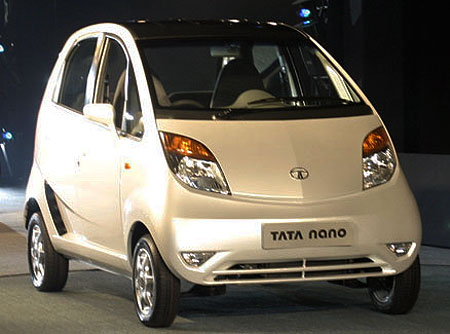
NEW DELHI: Tata Motors on Saturday said it has begun exporting Nano with the official launch of the small car in Sri Lanka, with a price tag starting at LKR 9.25 lakh (about Rs 3.80 lakh).
"Sri Lanka has become the first international market for the Tata Nano, with the people's car being commercially launched in the country today," the company said in a statement.
The car will be sold through its 50-year old distributor in the country -- Diesel & Motor Engineering PLC (DIMO).
"Tata Motors has already established a firm footprint in international markets...The Tata Nano will play a major role in the next phase of growth of our international business," Tata Motors Managing Director and Group CEO Carl-Peter Forster said.
A company spokesperson said the three variants of the car will be available at ex-showroom prices between LKR 9.25 lakh (about Rs 3).
"Sri Lanka has become the first international market for the Tata Nano, with the people's car being commercially launched in the country today," the company said in a statement.
The car will be sold through its 50-year old distributor in the country -- Diesel & Motor Engineering PLC (DIMO).
"Tata Motors has already established a firm footprint in international markets...The Tata Nano will play a major role in the next phase of growth of our international business," Tata Motors Managing Director and Group CEO Carl-Peter Forster said.
A company spokesperson said the three variants of the car will be available at ex-showroom prices between LKR 9.25 lakh (about Rs 3).
Reliance Mediaworks to make rights issue for raising Rs 500 cr

NEW DELHI: Reliance Mediaworks today said it will raise up to Rs 500 crore through an issue of equity shares to its existing shareholders.
In a filing to the Bombay Stock Exchange, the company said: "The board of directors has approved raising an amount not exceeding Rs 500 crore by way of rights offer of equity shares to the company's shareholders, subject to necessary sanctions, approvals and applicable provisions of law."
The company, however, said the price, share entitlement ratio, timing of the issue would be decided later.
"The board of directors has empowered its committee to decide upon the terms and conditions including the price, share entitlement ratio, timing and other details and modalities for the issue, which shall be informed in due course," it said.
The company posted a consolidated net loss of Rs 328.86 crore for the year ended March 31, 2011. In the previous fiscal, the company's net loss was Rs 143.51 crore, the filing said.
The company's consolidated net sales for the period under review increased 10.42 per cent to Rs 781.46 crore, as against Rs 707.69 crore in 2009-10.
Reliance Mediaworks is engaged in the business of film/television production and distribution and theatrical exhibition.
In a filing to the Bombay Stock Exchange, the company said: "The board of directors has approved raising an amount not exceeding Rs 500 crore by way of rights offer of equity shares to the company's shareholders, subject to necessary sanctions, approvals and applicable provisions of law."
The company, however, said the price, share entitlement ratio, timing of the issue would be decided later.
"The board of directors has empowered its committee to decide upon the terms and conditions including the price, share entitlement ratio, timing and other details and modalities for the issue, which shall be informed in due course," it said.
The company posted a consolidated net loss of Rs 328.86 crore for the year ended March 31, 2011. In the previous fiscal, the company's net loss was Rs 143.51 crore, the filing said.
The company's consolidated net sales for the period under review increased 10.42 per cent to Rs 781.46 crore, as against Rs 707.69 crore in 2009-10.
Reliance Mediaworks is engaged in the business of film/television production and distribution and theatrical exhibition.
Air India to combine 13 flights to tackle fresh financial crisis
 NEW DELHI: Faced with a twin attack from oil PSUs and operators of Delhi and Hyderabad airports asking it to clear their dues, Air India on Saturday drew up plans to combine 13 flights spread over a few sectors till the start of the lean season from mid-June.
In a bid to face the fresh financial crisis, the ailing national carrier sent a letter to the Civil Aviation Ministry urging the government to clear an estimated Rs 1,150 crore worth of dues on account of VVIP movements and evacuation flights including those to Libya.
It also wanted the government to take an expeditious decision on releasing Rs 1,200 crore worth of equity infusion, the provision for which has been made in the 2011-12 budget. This would enable the national carrier to face the crisis which has started adversely hitting its operations, sources said.
Three oil PSUs, Indian Oil Corporation , Bharat Petroleum Corporation Limited and Hindustan Petroleum Corporation , decided to slash supply of about 500 kilolitres of jet fuel per day to the airline, sources said.
To meet this situation, Air India has decided to fill the tanks of its aircraft from Dubai, London, Paris, Frankfurt and Bangkok where the prices are much cheaper than in India.
According to latest figures, Air India owes a total of Rs 2,250 crore to the three oil PSUs. The airline's daily fuel bill was Rs 13.5 crore in December when the oil firms stopped the credit line. It has now risen to Rs 18.5 crore due to the global crude price hike, from $70 to $120 a barrel.
To meet the fuel restrictions, the airline decided to curtail 13 of its services by combining flights on certain sectors, including Delhi-Mumbai and Chhattisgarh, they said.
During the lean season from June 15 till September, number of flights would in any case be curtailed due to low traffic and, therefore, there would be less fuel uplift.
Air India, which cancelled six flights yesterday, did not cancel any flight today, they said.
The oil PSUs and airline have reached an understanding that ATF supply would not be curtailed at all airports but at select major metros to give the airline the leeway to combine flights and adjust its loads and daily flight schedules.
On top of this crisis, the GMR-led Delhi International Airport Limited (DIAL) and GMR Hyderabad International Airport Limited (GHIAL) have also stopped their credit line and asked the national carrier to pay the landing, parking and navigation charges upfront or face restrictions on these services from June one.
Air India owes Rs 217.08 crore to DIAL and Rs 35.89 crore to GHIAL on account of these airport charges.
DIAL and GHIAL have also placed similar restrictions on Kingfisher Airlines which owes Rs 67.98 crore and Rs 21.98 crore respectively to DIAL and GHIAL.
The airport operators said Air India and Kingfisher would be allowed to operate their flights "only on cash and carry basis" from midnight of June one and had "significant amount of dues".
Gold, silver advance on global cues
MUMBAI: Gold and silver advanced further at the domestic bullion market here on Saaturday on sustained buying by stockists and speculators amid rising global trend.
In overseas market, the precious metals rose in overnight trade over a weaker dollar and renewed concerns about Middle East and North African unrest as well as European debt crises.
Silver ready (.999 fineness) climbed by Rs 295 per kg to finish at Rs 58,000 from Friday's closing level of Rs 57,705 per kg.
Standard gold (99.5 purity) hardened by Rs 120 per 10 grams to end at Rs 22,565 from Rs 22,445 previously.
Pure gold (99.9 purity) also strengthened by a similar margin of Rs 120 per 10 grams to close at Rs 22,665 as against Rs 22,545 yesterday.
In New York, gold for August delivery gained USD 13.60 to USD 1,537.30 an ounce on the Comex division of the NYMEX.
July silver moved up by 53 cents to USD 37.86 an ounce.
In overseas market, the precious metals rose in overnight trade over a weaker dollar and renewed concerns about Middle East and North African unrest as well as European debt crises.
Silver ready (.999 fineness) climbed by Rs 295 per kg to finish at Rs 58,000 from Friday's closing level of Rs 57,705 per kg.
Standard gold (99.5 purity) hardened by Rs 120 per 10 grams to end at Rs 22,565 from Rs 22,445 previously.
Pure gold (99.9 purity) also strengthened by a similar margin of Rs 120 per 10 grams to close at Rs 22,665 as against Rs 22,545 yesterday.
In New York, gold for August delivery gained USD 13.60 to USD 1,537.30 an ounce on the Comex division of the NYMEX.
July silver moved up by 53 cents to USD 37.86 an ounce.
Friday, May 27, 2011
US urges Green Card holders to become citizens

LOS ANGELES: US Citizenship and Immigration Services (USCIS) has launched a campaign emphasising the benefits of being a US citizen with the goal of convincing more than seven million Green Card holders to become naturalised. (Latest News on NRIs)
"It's very important for people who are already permanent residents to consider citizenship for all the benefits that that will bring them," Mariana Gitomer , the USCIS spokesperson in Los Angeles, told EFE .
The Citizen Public Education and Awareness Initiative will include radio and television advertisements, written press and Internet dissemination nationwide.
The messages will be broadcast in Spanish, Chinese, Vietnamese and English with special emphasis on the cities of Los Angeles and New York, and also on the states of Florida and Texas, where there are high numbers of permanent residents.
The first sentence of the message in Spanish, which will be spoken by an Hispanic woman, states: "I was born in Mexico and being an American citizen makes me proud."
"The campaign will last for three years and the funds, which amount to $11 million, are coming from an allocation made by the federal Congress in Fiscal Year 2010," Gitomer said.
"We're going to channel part of those funds to community organisations that help immigrants so they can help us to educate and convince people to become citizens," she added.
The USCIS spokesperson said that, according to the government's database, there are about 12.5 million permanent residents in the US, of whom 7.9 million are already eligible to get US citizenship, the majority of them being Hispanics.
In California alone, there are approximately three million people who obtained Green Cards more than five years ago.
"There are many reasons why people don't become citizens, some people don't know the benefits and feel that if they already have a residence card they can work, they can travel, then they feel they don't need citizenship," said Gitomer.
"But citizenship gives them the benefit of voting, obtaining a US passport to travel without restrictions, obtain better jobs," she said, citing studies that show that people who become citizens began to earn more money.
"It's very important for people who are already permanent residents to consider citizenship for all the benefits that that will bring them," Mariana Gitomer , the USCIS spokesperson in Los Angeles, told EFE .
The Citizen Public Education and Awareness Initiative will include radio and television advertisements, written press and Internet dissemination nationwide.
The messages will be broadcast in Spanish, Chinese, Vietnamese and English with special emphasis on the cities of Los Angeles and New York, and also on the states of Florida and Texas, where there are high numbers of permanent residents.
The first sentence of the message in Spanish, which will be spoken by an Hispanic woman, states: "I was born in Mexico and being an American citizen makes me proud."
"The campaign will last for three years and the funds, which amount to $11 million, are coming from an allocation made by the federal Congress in Fiscal Year 2010," Gitomer said.
"We're going to channel part of those funds to community organisations that help immigrants so they can help us to educate and convince people to become citizens," she added.
The USCIS spokesperson said that, according to the government's database, there are about 12.5 million permanent residents in the US, of whom 7.9 million are already eligible to get US citizenship, the majority of them being Hispanics.
In California alone, there are approximately three million people who obtained Green Cards more than five years ago.
"There are many reasons why people don't become citizens, some people don't know the benefits and feel that if they already have a residence card they can work, they can travel, then they feel they don't need citizenship," said Gitomer.
"But citizenship gives them the benefit of voting, obtaining a US passport to travel without restrictions, obtain better jobs," she said, citing studies that show that people who become citizens began to earn more money.
Infosys CEO designate Shibulal to bring back Basab Pradhan as global head of sales
 Infosys is set to appoint Basab Pradhan as the global head of sales next month, according to two people familiar with the decision.
 This appointment is seen as CEO designate SD Shibulal's first big move in the company as he tries to fire up the sales engine, at a time when Infosys is struggling to fend off rivals such as TCS and Cognizant.
An Infosys spokesperson said, "We will not be able to comment on this," in response to an e-mail query from ET NOW.
Basab Pradhan is not new to Infosys and was in fact head of sales in 2005, before he quit and founded Gridstone Research . But, he quit the startup during the downturn in 2009 and has been an independent writer and consultant in the last two years.
People familiar with discussions at Infosys he will don the same role he left in 2005-global head of sales. They, however, ruled out a board seat or even an executive council position for Mr Pradhan on his return. As sales head, he will also not have P & L (profit & loss) responsibility, unlike all the vertical heads.
"It's ironic that people who were reporting to him in 2005 are now being tipped to get board seats and a place in the executive council. He clearly lost out by quitting. But, he's now being brought back to improve the sales function," one of the persons said.
When asked about when the appointment will be effective, the person said Infosys and Mr Pradhan are in the final stages of negotiations and an appointment is likely next month.
Jairam Ramesh does a U-turn, now praises IITs
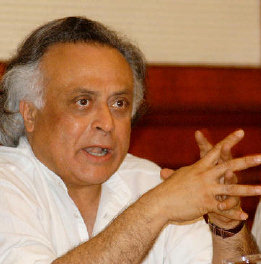
NEW DELHI: A day after Kapil Sibal demolished his arguments, Environment Minister, Jairam Ramesh did a U-turn and praised the IITs on Friday.
Ramesh had on Monday said the faculty and research of India's premier institutes, namely the Indian Institute of Technology and Indian Institute of Management , are not at par with similar facilities and faculties elsewhere around the globe.
Sibal rebutted the statement, and said some of the IIT institutions were at the top of their league, with IIT Mumbai at 21st rank in the global index of engineering colleges.
Sibal continued the list with IIT Delhi at number 24, IIT Kanpur at 37 and IIT Madras at 39.
Defending the faculty, Sibal said the 'world-class students' mentioned by Ramesh constituted 25 percent of the faculty.
In terms of publication too, he said, the rate was 15 to 17 per cent in case of IITs as against the global rate of 4 per cent.
However, noting that the IITs have not gained that critical mass to change the global scientific discourse, he said, "It has something to do with the ecosystem."
"If the US spends $250 billion dollars on research, India spends USD 8 billion dollars, you cannot create that critical mass. Thats not because of faculty," he said.
Ramesh had also said the reputation of the institutions were due to the excellence of their students, and not the faculty.
Ramesh had on Monday said the faculty and research of India's premier institutes, namely the Indian Institute of Technology and Indian Institute of Management , are not at par with similar facilities and faculties elsewhere around the globe.
Sibal rebutted the statement, and said some of the IIT institutions were at the top of their league, with IIT Mumbai at 21st rank in the global index of engineering colleges.
Sibal continued the list with IIT Delhi at number 24, IIT Kanpur at 37 and IIT Madras at 39.
Defending the faculty, Sibal said the 'world-class students' mentioned by Ramesh constituted 25 percent of the faculty.
In terms of publication too, he said, the rate was 15 to 17 per cent in case of IITs as against the global rate of 4 per cent.
However, noting that the IITs have not gained that critical mass to change the global scientific discourse, he said, "It has something to do with the ecosystem."
"If the US spends $250 billion dollars on research, India spends USD 8 billion dollars, you cannot create that critical mass. Thats not because of faculty," he said.
Ramesh had also said the reputation of the institutions were due to the excellence of their students, and not the faculty.
India, France in talks over fighter jet deals during France defence minister visit

BANGALORE: Concerns over arms sales to Pakistan and the outcome of several multi-billion arms deals dominated talks between French defence minister Gerard Longuet and his Indian counterpart, AK Antony, during the former's two-day visit to New Delhi starting Friday.
Mr Longuet's visit comes at a time when India is looking to finalise the lucrative $11-billion Medium Multi-Role Combat Aircraft (MMRCA) tender for 126 fighter jets for the Indian Air Force , for which French aerospace giant, Dassault Aviation is one of the contenders, through its offering, Rafale.
"We have one single speaking partner (Dassault) instead of four partners (European firms from Italy, Germany, Spain and UK). Mr Longuet said, taking an expected swipe at rival short-listed candidate, the pan-European consortium built, Eurofighter Typhoon.
The MMRCA tender is considered the most military aviation contract in recent times, and had some of the world's largest defence vendors vying for it, including Lockheed Martin, Boeing and Saab.
The French minister also said that a decision on the IAF's $2.4-billion Mirage-2000 fleet upgrade was also eagerly awaited. Last week ET had reported that the while the contract was yet to be formally signed, the Cabinet Committee on Security , which gives the final go-ahead for large procurements, had given its tacit approval for the deal.
"We are in the final stages of the upgrade agreement. It is up to the Indian political establishment to take a decision. We are confident that it will happen soon," he said.
France's ambassador to India, Jerome Bonnafont also confirmed that price negotiations over the deal had been completed, and a decision was awaited. Longuet also assuaged Indian concerns about the sale of arms by Paris to Islamabad, which includes military systems, aircrafts and submarine in the past.
"Concerns did come up in my discussions with the Indian Defence Minister about India's concerns. We supply Pakistan equipment that enables them to intercept terrorist communications. And we have decided to discourage any requests from Pakistan for heavy equipment, notably naval equipment," the defence minister said.
However, Longuet refused to elaborate whether Paris was reviewing its military sales policy towards Pakistan.
Apart from meeting Mr Antony, Longuet will also be meeting the three Indian military service chiefs during his visit.
Mr Longuet's visit comes at a time when India is looking to finalise the lucrative $11-billion Medium Multi-Role Combat Aircraft (MMRCA) tender for 126 fighter jets for the Indian Air Force , for which French aerospace giant, Dassault Aviation is one of the contenders, through its offering, Rafale.
"We have one single speaking partner (Dassault) instead of four partners (European firms from Italy, Germany, Spain and UK). Mr Longuet said, taking an expected swipe at rival short-listed candidate, the pan-European consortium built, Eurofighter Typhoon.
The MMRCA tender is considered the most military aviation contract in recent times, and had some of the world's largest defence vendors vying for it, including Lockheed Martin, Boeing and Saab.
The French minister also said that a decision on the IAF's $2.4-billion Mirage-2000 fleet upgrade was also eagerly awaited. Last week ET had reported that the while the contract was yet to be formally signed, the Cabinet Committee on Security , which gives the final go-ahead for large procurements, had given its tacit approval for the deal.
"We are in the final stages of the upgrade agreement. It is up to the Indian political establishment to take a decision. We are confident that it will happen soon," he said.
France's ambassador to India, Jerome Bonnafont also confirmed that price negotiations over the deal had been completed, and a decision was awaited. Longuet also assuaged Indian concerns about the sale of arms by Paris to Islamabad, which includes military systems, aircrafts and submarine in the past.
"Concerns did come up in my discussions with the Indian Defence Minister about India's concerns. We supply Pakistan equipment that enables them to intercept terrorist communications. And we have decided to discourage any requests from Pakistan for heavy equipment, notably naval equipment," the defence minister said.
However, Longuet refused to elaborate whether Paris was reviewing its military sales policy towards Pakistan.
Apart from meeting Mr Antony, Longuet will also be meeting the three Indian military service chiefs during his visit.
Honda to resume normal production in India by festive season
 NEW DELHI: Honda Siel Cars India on Friday said it is likely to hike production by August and resume normal output by the festive season with component supply from its parent in Japan, which was disrupted after the devastating earthquake and tsunami in March, limps back towards normalcy.
Honda Siel Cars India (HSCI) had cut production by 50 per cent since the beginning of this month and said it would last till about July.
"The parts supply is now expected to increase gradually and production volume will be increased starting August 2011 with the expectation that HSCI will begin operating on normal production from the festival season," HSCI said in a statement.
Production volume is likely to get normalised from the festival season, it added.
"Honda Motor is exerting a company wide effort to normalise our production as soon as possible," it said, adding the Japanese parent is making adjustments to its production volume in the Asia Oceania region based on the parts supply situation from Japan.
When the company trimmed its output, it had moved to single shift operations since the beginning of this month. Prior to the production cut, the HSCI unit at Greater Noida was rolling out about 5,000 units every month. The company imports various components from Japan such as engine parts and electronics.
The company has also set up its second facility at Tapukara, in Rajasthan. The plant, which has a capacity to produce 60,000 units annually, has not started manufacturing of vehicles yet.
Meanwhile, the company said its compact car Honda Brio will be launched as per the original schedule during the festival season this year.
Google takes a 'Street View' of Bangalore

BANGALORE: Forgot the name of your favourite showroom in Delhi's Connaught Place or Mumbai's Colaba or Bangalore's Brigade Road? There'll soon be an easy way out. With the click of a mouse, you can virtually roam the locality and locate the shop that failed your memory.
That's what Google's Street View does. This popular feature of Google Maps is making its India foray through a Bangalore launch.
The web giant on Thursday took the first step of putting its camera-mounted cars on Bangalore roads to capture images of landmarks. To access narrow and uneven roads, Google employs a trike, a camera-mounted modified bicycle.
The captured photographs are processed and stitched for a 360-degree view before they are attached to Google Maps. To use Street View, log into Google Map, click and place "the pegman" (an image of a person seen on top of the navigation tool) on the street you want to visit. And what you get is a high-resolution, near-life panoramic view of the location.
Street View already has landmark database of more than 100 cities across 27 countries. The feature is available on mobiles too.
Google India product head Vinay Goel said Street View has multiple uses for both individuals and organizations. "It lets users check out restaurants before arriving, make travel plans and arrange meeting points. It helps the tourism department, for example, to showcase a monument by embedding the Google Map directly into their site for free. Prospective buyers of a house can do an online locality recce before the actual visit."
Google is not the first to do this in Bangalore. A start-up called VidTeq has used camera-mounted vehicles to take videos of most Bangalore roads, and provides these as online videos to help people find directions and places. Companies, especially those in real estate and retail, use the service to provide directions to their properties. The videos require more bandwidth than Google's Street View, but provide much greater detail.
Privacy concerns
Dispelling privacy concerns, Goel said only images of public places will be captured. "These images are no different from what a person can readily see or capture walking down the street."
"As an additional privacy protection measure, the faces and number plates of vehicles seen in the photographs will be blurred," he said. "If there are concerns still, the user can click on 'report a problem' button on the bottom-right corner of Street View image. Once the claim is verified, the image is removed."
That's what Google's Street View does. This popular feature of Google Maps is making its India foray through a Bangalore launch.
The web giant on Thursday took the first step of putting its camera-mounted cars on Bangalore roads to capture images of landmarks. To access narrow and uneven roads, Google employs a trike, a camera-mounted modified bicycle.
The captured photographs are processed and stitched for a 360-degree view before they are attached to Google Maps. To use Street View, log into Google Map, click and place "the pegman" (an image of a person seen on top of the navigation tool) on the street you want to visit. And what you get is a high-resolution, near-life panoramic view of the location.
Street View already has landmark database of more than 100 cities across 27 countries. The feature is available on mobiles too.
Google India product head Vinay Goel said Street View has multiple uses for both individuals and organizations. "It lets users check out restaurants before arriving, make travel plans and arrange meeting points. It helps the tourism department, for example, to showcase a monument by embedding the Google Map directly into their site for free. Prospective buyers of a house can do an online locality recce before the actual visit."
Google is not the first to do this in Bangalore. A start-up called VidTeq has used camera-mounted vehicles to take videos of most Bangalore roads, and provides these as online videos to help people find directions and places. Companies, especially those in real estate and retail, use the service to provide directions to their properties. The videos require more bandwidth than Google's Street View, but provide much greater detail.
Privacy concerns
Dispelling privacy concerns, Goel said only images of public places will be captured. "These images are no different from what a person can readily see or capture walking down the street."
"As an additional privacy protection measure, the faces and number plates of vehicles seen in the photographs will be blurred," he said. "If there are concerns still, the user can click on 'report a problem' button on the bottom-right corner of Street View image. Once the claim is verified, the image is removed."
Ferrari drives in to tap desi luxury market
 NEW DELHI: Italian sports carmaker Ferrari has come to India looking to tap the growing appetite of Indians for luxury cars. The company joins the league of other sports car brands in the country like Porsche, Aston Martin and fellow Fiat group company Maserati.
The company, part of Fiat's stable, will sell models like California, 458 Italia, 599GTB Fiorano and the latest FF, priced upwards of Rs 2 crore. Amedeo Felisa, chief executive officer of Ferrari, said, "India was coming up as an emerging market for luxury cars and Ferrari hopes to sell 100 cars in the next 2-3 years." TOI had first reported about Ferrari's India entry plans in November 2010.
The company, however, decided not to go with the Tata group for retail of its cars, something that has been done by its parent Fiat. Felisa said that discussions over the possibility were held with the Indian auto major, though later both decided against it. Shreyans Group, the official importer for Porsche and Maserati, will also be getting in Ferrari models to India.
Felisa said that the company expected a positive rub-off for the brand from the Indian Formula 1 Grand Prix that is slated for October this year.
But just as the company makes its official entry into the market now, its cars are already present in India as people imported the models. Tata Motors chairman Ratan Tata owns a Ferrari and other famous Indians to own the car include Sachin Tendulkar (who was gifted a Ferrari 360 Modena by Fiat when he equaled the late Don Bradman's tally of 29 Test centuries) and liquor baron Vijay Mallya.
The company opened its first dealership in the national capital and will follow this with a showroom in Mumbai later.
Vehicle owners drive in 'zero dep' policy cover
 MUMBAI: Zero depreciation covers, also known as 'zero dep' policies, for motor insurance are becoming a hit among mid- and top-segment vehicles with most preferring the enhanced cover over the standard motor policy.
These policies came tomade their entry into the India market two years ago after the regulator gave companies the freedom to modify standard motor insurance policies. One glaring shortcoming of the standard motor policies was that the insured had to pay a large amount for repairs of plastic and fibre parts and also in the case of old vehicles, a large chunk of the repair cost was recovered from the customer because he was getting new parts for old.
In the case of mid and top-segment cars, the vehicle owner ends up paying for a large chunk of the repairs due to because of damages to the bumper and rubber parts. In major accidents, the cost of these can itself add up to over Rs 1 lakh which has to be borne by the owner even if he has a standard motor policy which incidentally is also called a `comprehensive ' cover'.
The zero dep policy pays the claim in full for a premium which is around 20% higher than the standard cover.
"The zero depreciation policies are becoming a standard cover at the high-end and many mid-segment car owners are going for this cover," said Gaurav Gupta, MD, Tata AIG General Insurance. Tata AIG was one of the earliest companies to introduce this product when regulations were eased in 2009. "Our policy package besides providing zero depreciation also ensures that the policyholder does not lose his no-claim bonus," said Gupta.
According to Vijay Kumar, head, motor insurance at Bajaj Allianz General Insurance, depreciation deductions can be as high as 40% depending on the age of the vehicles. "We offer this cover as a part of a package which includes zero depreciation, roadside assistance and also covers damages to the engine on account of hydrostatic lock (damage due to water entering the engine)," he said.
But despite the increasing sales of this policy, several vehicle owners are not aware of this product.
S Harsh Vardhan, a senior executive with a private firm in Mumbai was upset when he discovered that he had to cough up Rs 65,000 towards repairs to his Honda Civic for parts that the insurance company would not pay in full. He was doubly upset on discovering that there was a cover which would have paid for these damages. "If I had known that I could get a zero dep policy for a few thousand rupees more, I would have definitely gone for it" he said.
State-run banks pile up bad debts

NEW DELHI: It isn't just the State Bank of India
According to data compiled by the finance ministry in 2009-10, at least 41% of net credit of state-owned lenders of Rs 8.65 lakh crore was extended to priority sectors such as agriculture, small-scale industry (SSI) and to the weaker sections.
Highest non-performing assets (NPAs) were reported from the agriculture and SSI, while comparatively smaller proportion of loans to the weaker sections turned bad.
During April-December 2010, at least Rs 12,733 crore of bad debt came from the farm sector alone, a 70% rise over the year ago. And this came on top of the 2009-10 performance, when Rs 8,330 crore of farm loans had turned sticky. This represented a 41% increase over 2008-09.
Slippages in SSI too are high. According to finance ministry data, during the first nine months of 2010-11, NPAs rose almost 80% from around Rs 7,000 crore to Rs 12,500 crore. Among other priority sectors, loans granted to weaker sections showed improvement in asset quality. As compared to Rs 11,626 crore of bad debts in 2009, the gross NPAs came down to Rs 10,981 crore in 2010, a decrease of around 5.5%.
During a performance review in Mumbai last week, finance minister Pranab MukherjeeNPA level and has asked banks to spruce up their balance sheets and carry out better due diligence during lending. However, his concern doesn't match with his Budget announcements where year-after-year he has been forcing these government banks to increase credit to the sector which still has to mature.
This year, the FM has asked public sector banks (PSBs) to achieve a target of 15% of total priority sector loans to minority communities. For the agriculture sector, he has raised the target by Rs 1 lakh crore from Rs 3.75 lakh crore last year to Rs 4.75 lakh crore in 2011-12.
that has large pools of bad debt. Other public sector lenders too face a similar situation with the pressure arising from the priority sector - the government's pet project. expressed concern at the rising
According to data compiled by the finance ministry in 2009-10, at least 41% of net credit of state-owned lenders of Rs 8.65 lakh crore was extended to priority sectors such as agriculture, small-scale industry (SSI) and to the weaker sections.
Highest non-performing assets (NPAs) were reported from the agriculture and SSI, while comparatively smaller proportion of loans to the weaker sections turned bad.
During April-December 2010, at least Rs 12,733 crore of bad debt came from the farm sector alone, a 70% rise over the year ago. And this came on top of the 2009-10 performance, when Rs 8,330 crore of farm loans had turned sticky. This represented a 41% increase over 2008-09.
Slippages in SSI too are high. According to finance ministry data, during the first nine months of 2010-11, NPAs rose almost 80% from around Rs 7,000 crore to Rs 12,500 crore. Among other priority sectors, loans granted to weaker sections showed improvement in asset quality. As compared to Rs 11,626 crore of bad debts in 2009, the gross NPAs came down to Rs 10,981 crore in 2010, a decrease of around 5.5%.
During a performance review in Mumbai last week, finance minister Pranab MukherjeeNPA level and has asked banks to spruce up their balance sheets and carry out better due diligence during lending. However, his concern doesn't match with his Budget announcements where year-after-year he has been forcing these government banks to increase credit to the sector which still has to mature.
This year, the FM has asked public sector banks (PSBs) to achieve a target of 15% of total priority sector loans to minority communities. For the agriculture sector, he has raised the target by Rs 1 lakh crore from Rs 3.75 lakh crore last year to Rs 4.75 lakh crore in 2011-12.
that has large pools of bad debt. Other public sector lenders too face a similar situation with the pressure arising from the priority sector - the government's pet project. expressed concern at the rising
Sensex jumps 197 pts on high cos earnings, firm global cues

MUMBAI: The Bombay Stock Exchange benchmark sensex
The 30-share index shot up by 197.40 points to 18,044.64, on the back of a rally in blue chip stocks Reliance IndustriesCoal India and Tata Steel. It had sunk to its lowest since March 21 after it lost 165 points in the previous session.
Broad-based National Stock Exchange index, Nifty, climbed 63.40 points to 5,412.35, after the recovery in metal, realty, banks and refinery stocks. Trading sentiment turned bullish on reports of attractive quarter earnings posted by Tata Steel, PSU miner Coal India Ltd and private energy major Cairn India.
on Thursday recovered from a nine-week low and surged 197 points on emergence of buying, spurred by higher profit earnings posted by blue chips amid a firming global trend. (RIL), Tata Steel jumped 1.98% to Rs 572.60, Coal India by 3.22% to Rs 389.15, and Cairn India gained 1.40% to Rs 342.85, buoyed by solid numbers for the quarter ended March 31.
Smooth carry forward of positions for next month contract in the derivatives segment and a firming trend overseas helped balance fears of further rise in interest rates on account of high food inflation.
Food inflation jumped to 8.55% for the week ended May 14 from 7.47% in the previous week.
RIL, the most valuable scrip on the sensex, rose by 2,92% to six-week high of Rs 933.25 on reports that the government might allow the company to charge market prices for natural gas sold to users other than fertiliser, power companies and for domestic consumption.
The 30-share index shot up by 197.40 points to 18,044.64, on the back of a rally in blue chip stocks Reliance IndustriesCoal India and Tata Steel. It had sunk to its lowest since March 21 after it lost 165 points in the previous session.
Broad-based National Stock Exchange index, Nifty, climbed 63.40 points to 5,412.35, after the recovery in metal, realty, banks and refinery stocks. Trading sentiment turned bullish on reports of attractive quarter earnings posted by Tata Steel, PSU miner Coal India Ltd and private energy major Cairn India.
on Thursday recovered from a nine-week low and surged 197 points on emergence of buying, spurred by higher profit earnings posted by blue chips amid a firming global trend. (RIL), Tata Steel jumped 1.98% to Rs 572.60, Coal India by 3.22% to Rs 389.15, and Cairn India gained 1.40% to Rs 342.85, buoyed by solid numbers for the quarter ended March 31.
Smooth carry forward of positions for next month contract in the derivatives segment and a firming trend overseas helped balance fears of further rise in interest rates on account of high food inflation.
Food inflation jumped to 8.55% for the week ended May 14 from 7.47% in the previous week.
RIL, the most valuable scrip on the sensex, rose by 2,92% to six-week high of Rs 933.25 on reports that the government might allow the company to charge market prices for natural gas sold to users other than fertiliser, power companies and for domestic consumption.
Rupee gains 4 paise against US dollar in early trade
 MUMBAI: The Indian rupee appreciated by 4 paise to Rs 45.28 per dollar at the Interbank Foreign Exchange on Thursday, supported by a higher opening in the stock market and dollar weakness against the euro and other Asian currencies.
The rupee had declined by 11 paise to close at a three-month low of Rs 45.32/33 against the US currency in yesterday's trade amid weakness in domestic equities and dollar demand from importers.
Forex dealers said dollar weakness against the euro and other currencies overseas and a higher opening in the stock market mainly kept the rupee sentiment firm against the American dollar.
Meanwhile, the Bombay Stock Exchange Sensex was up by 137.70 points at 17,984.94 in opening trade today.
Thursday, May 26, 2011
15 Reasons To Buy Gold

It's true.
The rich ARE getting richer.
Whether the economy is up or down and whether unemployment is high or low... the billionaires of the world always seem two steps ahead of EVERYONE ELSE.
In fact, Forbes recently reported that over the past year alone, the richest people in the world are now $1 trillion richer!
That's $1,000,000,000,000... or twelve zeros.
All the while, everyone else's retirement funds, investments, and salaries either remained stagnant or dropped!
It doesn't just seem unfair.It's downright infuriating!
And get this:
They're making their killing, right now, through ditching their stock portfolios!
That's right. The world's wealthiest people – guys like George Soros, Bill Gates, and Warren Buffett – aren't using the stock market to expand their fortunes.
In fact, they're running from investments traded in ANY paper currency.
Instead, they're stocking up on as much precious metals as they can afford.
The Times New World reports that these multi-billionaires are literally starting to buy gold by the ton.
The moment that news hit my desk, I started digging up as much information as I possibly could.
After all, everyone knows that their secret to success is to always be several steps ahead of everyone else. So before anything happens, I wanted to know why.
What I found was utterly shocking. But acting on it now could help protect your financial future forever.
In fact, before another second goes by, I want to rush you my latest report “Why Invest in Gold”.
And I want you to have it – absolutely free of charge!
In it, I won't simply show you why the world's top tycoons are flocking into precious metals.
I'll also reveal a secret way for you to get started, too – even if you can't afford buying a single ounce!
The report is a must-read for anyone interested in protecting your wealth over the coming months and years – following the very same steps that the world's wealthiest take.
To receive your free report, simply sign up for the free Wealth Daily e-letter below.
Wealth Daily is known throughout the world, by many financial experts, to print the most in-depth market analysis, period.
It's not simply an investment letter that spews yesterday's news.
Instead, like the world's wealthiest people, Wealth Daily is a publication that prides itself on keeping its readers informed and prepared long before tomorrow – or even next month's – opening bell.
… So that you're positioned to collect profits, no matter what happens.
Simply put, each issue of Wealth Daily in your inbox is your own private glimpse into the financial market's future.
And for you, each and every issue is absolutely free - guaranteed!
French finance minister Lagarde leads IMF race, competition from Mexico

PARIS/MEXICO CITY: French finance minister Christine Lagarde's candidacy for IMF chief gained momentum in Europe on Sunday while Mexico put forward its own candidate, ensuring competition for the top job.
The Mexican finance ministry said it would nominate central bank chief Agustin Carstens, placing a prominent emerging market name into the race to lead the global lender.
The International Monetary Fund has promised a merit-based process to replace former leader Dominique Strauss-Kahn of France, who is under house arrest in New York on charges he attempted to rape a hotel maid.
Europeans have held the top IMF job since its creation in 1945 and Lagarde is widely considered the front-runner.
French Interior Minister Claude Gueant, a top advisor to French President Nicolas Sarkozy, said on Sunday Lagarde would make an excellent head of the Washington-based lender.
"And besides, many countries support her," he told Europe 1 radio, becoming the first member of France's cabinet to openly tout her credentials.
Germany and Britain also have signaled they would line up behind Lagarde, who has experience managing the euro-zone debt crisis the IMF is now focused on.
A senior EU official said there was virtual consensus on Lagarde in the 27-nation European Union after telephone consultations among the leaders. Her candidacy is expected to win US backing, which would tip the votes in her favor at the IMF board.
Strauss-Kahn, a leading contender for the French presidency until his May 15 detention on sexual assault charges, spent his second day out on bail under electronic monitoring and armed guard at a temporary apartment in lower Manhattan. He has vowed to fight the charges.
His resignation has started a tug of war between Europe and emerging economies, which argue it is time to end 65 years of European domination of the IMF post.
In Mexico, the finance ministry said Carstens "has the abilities and qualifications needed to lead an institution of the relevance of the International Monetary Fund."
He was a deputy IMF managing director before joining Mexican President Felipe Calderon's administration in 2006 and headed the central bank from January 2010.
The finance ministers of Australia and South Africa also said on Sunday that the tradition of the IMF leadership going to Europe was out of date, calling on G-20 nations to honor a pledge they made two years ago for an open selection.
Oxfam spokeswoman Sarah Wynn-Williams said the IMF will undermine its legitimacy if it fails to have a selection process that better reflects the weight of countries in the global economy.
KNOWLEDGE OF EUROPE
European powers have started to close ranks behind Lagarde as their regional pick, stressing it was crucial the next managing director has knowledge of Europe.
On Saturday, British finance minister George Osborne said Lagarde, a 55-year-old former lawyer, was an outstanding candidate and German Chancellor Angela Merkel called her an experienced "figure of excellent standing."
With the support of Europe's three largest economies appearing to secure her the region's nomination, Lagarde may only need to secure support from the United States.
Leaders from the G-8 rich nations are expected to discuss a replacement for Strauss-Kahn at a summit this week in the French coastal resort of Deauville but it was not yet clear if they would make any formal announcement.
Lagarde, who worked as a lawyer in the United States for about 20 years and speaks flawless English, was seen to have gained allies in both developing and developed countries over the course of France's G20 presidency this year.
Her odds of getting the IMF job received a boost on Friday when former Turkish economy minister Kemal Dervis -- seen as the leading emerging market candidate -- ruled himself out of the running.
The biggest obstacle to Lagarde's prospects could come from a legal investigation into her decision to settle a dispute between the state and a businessman and friend of Sarkozy, who won a payoff of 285 million euros ($405 million).
A panel of judges is expected to decide by mid-June whether to launch a formal investigation into the case, ahead of the IMF appointment, which is expected by June 30.
Strauss-Kahn's arrest has ignited vivid debate in France, where 70 percent of Socialist supporters polled the day after his arrest said they thought he was the victim of a plot.
But many women said they thought the French media had been insensitive to the plight of the alleged victim.
Several hundred people demonstrated outside Paris' Pompidou Center on Sunday and 13,000 people signed a petition denouncing chauvinism in the portrayal of Strauss-Kahn's situation.
Strauss-Kahn has denied the charges and vowed to fight them. His wife, Anne Sinclair, has stood by him.
She left the New York apartment Sunday morning and returned mid-afternoon in a black SUV, escorted by a security guard. She did not speak to reporters gathered across the street. Three police officers guarded the entrance to the building.
The Mexican finance ministry said it would nominate central bank chief Agustin Carstens, placing a prominent emerging market name into the race to lead the global lender.
The International Monetary Fund has promised a merit-based process to replace former leader Dominique Strauss-Kahn of France, who is under house arrest in New York on charges he attempted to rape a hotel maid.
Europeans have held the top IMF job since its creation in 1945 and Lagarde is widely considered the front-runner.
French Interior Minister Claude Gueant, a top advisor to French President Nicolas Sarkozy, said on Sunday Lagarde would make an excellent head of the Washington-based lender.
"And besides, many countries support her," he told Europe 1 radio, becoming the first member of France's cabinet to openly tout her credentials.
Germany and Britain also have signaled they would line up behind Lagarde, who has experience managing the euro-zone debt crisis the IMF is now focused on.
A senior EU official said there was virtual consensus on Lagarde in the 27-nation European Union after telephone consultations among the leaders. Her candidacy is expected to win US backing, which would tip the votes in her favor at the IMF board.
Strauss-Kahn, a leading contender for the French presidency until his May 15 detention on sexual assault charges, spent his second day out on bail under electronic monitoring and armed guard at a temporary apartment in lower Manhattan. He has vowed to fight the charges.
His resignation has started a tug of war between Europe and emerging economies, which argue it is time to end 65 years of European domination of the IMF post.
In Mexico, the finance ministry said Carstens "has the abilities and qualifications needed to lead an institution of the relevance of the International Monetary Fund."
He was a deputy IMF managing director before joining Mexican President Felipe Calderon's administration in 2006 and headed the central bank from January 2010.
The finance ministers of Australia and South Africa also said on Sunday that the tradition of the IMF leadership going to Europe was out of date, calling on G-20 nations to honor a pledge they made two years ago for an open selection.
Oxfam spokeswoman Sarah Wynn-Williams said the IMF will undermine its legitimacy if it fails to have a selection process that better reflects the weight of countries in the global economy.
KNOWLEDGE OF EUROPE
European powers have started to close ranks behind Lagarde as their regional pick, stressing it was crucial the next managing director has knowledge of Europe.
On Saturday, British finance minister George Osborne said Lagarde, a 55-year-old former lawyer, was an outstanding candidate and German Chancellor Angela Merkel called her an experienced "figure of excellent standing."
With the support of Europe's three largest economies appearing to secure her the region's nomination, Lagarde may only need to secure support from the United States.
Leaders from the G-8 rich nations are expected to discuss a replacement for Strauss-Kahn at a summit this week in the French coastal resort of Deauville but it was not yet clear if they would make any formal announcement.
Lagarde, who worked as a lawyer in the United States for about 20 years and speaks flawless English, was seen to have gained allies in both developing and developed countries over the course of France's G20 presidency this year.
Her odds of getting the IMF job received a boost on Friday when former Turkish economy minister Kemal Dervis -- seen as the leading emerging market candidate -- ruled himself out of the running.
The biggest obstacle to Lagarde's prospects could come from a legal investigation into her decision to settle a dispute between the state and a businessman and friend of Sarkozy, who won a payoff of 285 million euros ($405 million).
A panel of judges is expected to decide by mid-June whether to launch a formal investigation into the case, ahead of the IMF appointment, which is expected by June 30.
Strauss-Kahn's arrest has ignited vivid debate in France, where 70 percent of Socialist supporters polled the day after his arrest said they thought he was the victim of a plot.
But many women said they thought the French media had been insensitive to the plight of the alleged victim.
Several hundred people demonstrated outside Paris' Pompidou Center on Sunday and 13,000 people signed a petition denouncing chauvinism in the portrayal of Strauss-Kahn's situation.
Strauss-Kahn has denied the charges and vowed to fight them. His wife, Anne Sinclair, has stood by him.
She left the New York apartment Sunday morning and returned mid-afternoon in a black SUV, escorted by a security guard. She did not speak to reporters gathered across the street. Three police officers guarded the entrance to the building.
Lagarde is wrong choice to head IMF
Speaking fluent English and being European shouldn't be the only two qualities required of a managing director of the International Monetary Fund. Yet some of the IMF's major shareholders—many European members, probably the US, and possibly China—seem to agree that Christine Lagarde should head the institution now that Dominique Strauss-Kahn has resigned. Yet after four years spent as French finance minister, it's hard to see what qualifies her for this job, save for fawning by the international media.
Let's skip over the important point that there's no reason the job should go to a European in the first place. German Chancellor Angela Merkel's idea that it takes an IMF chief from the Eurozone to deal with its debt mess can easily be shot down: a non-European wouldn't be suspected of being an interested party in the heated debates over how to resolve the crisis. Strauss-Kahn did a stellar job cajoling the Europeans into action, using the carrot of IMF cash. But this had more to do with his own qualities than his passport.
Let's also forget the not-somundane problem that Lagarde could soon be placed under formal investigation for having allegedly misused her powers to help one of Sarkozy's friends in a business dispute.
More troubling is that Lagarde lacks some of the qualities required for the job. As French finance minister, there's no single reform, debate, decision or policy her name can be attached to. She has done mostly Nicolas Sarkozy's bidding. Throughout the debt crisis, she articulated France's position but didn't help much to define it. Finally, she hasn't even done what finance ministers should do in deficitprone countries: be the voice of fiscal discipline. Her voice on this has barely been heard.
Lagarde, who has no academic training in economics or finance, doesn't even seem to have a strong set of beliefs. She has mostly been an executor and the international face of Sarkozy's policies, which certainly hasn't prepared her for a job she would only get after high-level diplomatic horse-trading. The IMF needs a leader. She doesn't fit the bill.
THINGS LAGARDE LACKS
• As French FM, there's no single reform, debate, decision or policy Lagarde's name can be attached to
• She has done mostly Sarkozy's bidding
• Throughout the debt crisis, she didn't help much to define France's position
• She has not been the voice of fiscal discipline
• Lagarde has no training in economics or finance
Let's skip over the important point that there's no reason the job should go to a European in the first place. German Chancellor Angela Merkel's idea that it takes an IMF chief from the Eurozone to deal with its debt mess can easily be shot down: a non-European wouldn't be suspected of being an interested party in the heated debates over how to resolve the crisis. Strauss-Kahn did a stellar job cajoling the Europeans into action, using the carrot of IMF cash. But this had more to do with his own qualities than his passport.
Let's also forget the not-somundane problem that Lagarde could soon be placed under formal investigation for having allegedly misused her powers to help one of Sarkozy's friends in a business dispute.
More troubling is that Lagarde lacks some of the qualities required for the job. As French finance minister, there's no single reform, debate, decision or policy her name can be attached to. She has done mostly Nicolas Sarkozy's bidding. Throughout the debt crisis, she articulated France's position but didn't help much to define it. Finally, she hasn't even done what finance ministers should do in deficitprone countries: be the voice of fiscal discipline. Her voice on this has barely been heard.
Lagarde, who has no academic training in economics or finance, doesn't even seem to have a strong set of beliefs. She has mostly been an executor and the international face of Sarkozy's policies, which certainly hasn't prepared her for a job she would only get after high-level diplomatic horse-trading. The IMF needs a leader. She doesn't fit the bill.
THINGS LAGARDE LACKS
• As French FM, there's no single reform, debate, decision or policy Lagarde's name can be attached to
• She has done mostly Sarkozy's bidding
• Throughout the debt crisis, she didn't help much to define France's position
• She has not been the voice of fiscal discipline
• Lagarde has no training in economics or finance
Ferrari enters India, launches cars priced at Rs 2.2 crore onwards
 NEW DELHI: Italian luxury sports car Ferrari on Thursday officially entered the Indian market with popular models such as the California, 458 Italia, 599GTB Fiorano and the latest FF at prices starting from Rs 2.2 crore onward.
"Till yesterday, Ferrari was present in 57 countries. Now we are in the 58th country, which is India. We should have been in India much before and we expect to be able to sell more than 100 cars in the next 2-3 years," Ferrari SpA Chief Executive Officer Amedeo Felisa told reporters here.
The company has appointed the Shreyans Group as its official importer in India. Bookings for the cars start today with the opening of the first dealership in the national capital. The second showroom is scheduled to open in Mumbai in the second half of 2011.
The Ferrari range which will be sold in India includes the Ferrari California priced at Rs 2.2 crore, 458 Italia at Rs 2.56 crore and 599GTB Fiorano tagged at Rs 3.37 crore. All prices are ex-showroom Delhi.
Ferrari's latest model the FF, which was unveiled at the Geneva Motor Show earlier this year, will also be available. It carries a price tag of Rs 3.41 crore.
The Shreyans Group is involved with luxury retail in India, including interests in products such as yachts, super bikes, fashion articles and jewellery, besides cars.
Explaining the late arrival of Ferrari in India, Felisa said it was waiting for the right time to enter the market.
"We are in India for the long run and we wanted to be here at the right time after testing the market," he said.
In 2008, Ferrari had conducted a 'Magic India Discovery Drive' in India, covering more than 13,000 kilometres and touching 57 cities over 74 days as part of a market testing exercise.
Felisa said globally, Ferrari sold 6,500 cars in 2010 and this year, the company expects to do much better.
"This year, we expect to beat our best-ever sales of 6,700 units achieved in 2007," he said.
The US is Ferrari's biggest market, accounting for about 30 per cent of sales, followed by Germany, while Japan is the biggest in Asia.
He said the Great China region, comprising China, Hong Kong and Taiwan, also has great potential and could become the company's second largest market.
The company sold about 600 units in the region last year.
US stocks open down after Europe, Asian drops
 WASHINGTON: US stocks opened lower on Wednesday in the wake of slumping markets across Asia and Europe.
The Dow Jones Industrial Average dropped 29.59 points (0.24%) to 12,326.62 in the first minutes of trade.
The broader Standard & Poor's 500 index gave up 3.15 points (0.24%) at 1,313.13 and the tech-heavy Nasdaq Composite fell 3.71 points (0.14%) to 2,742.45.
Utilities and consumer goods stocks were generally lower while energy shares rose a day after Goldman Sachs and Morgan Stanley forecast the price for Brent crude, London's benchmark, would hit $130 a WASHINGTON: US stocks opened lower on Wednesday in the wake of slumping markets across Asia and Europe.
The Dow Jones Industrial Average dropped 29.59 points (0.24%) to 12,326.62 in the first minutes of trade.
The broader Standard & Poor's 500 index gave up 3.15 points (0.24%) at 1,313.13 and the tech-heavy Nasdaq Composite fell 3.71 points (0.14%) to 2,742.45.
Utilities and consumer goods stocks were generally lower while energy shares rose a day after Goldman Sachs and Morgan Stanley forecast the price for Brent crude, London's benchmark, would hit $130 a WASHINGTON: US stocks opened lower on Wednesday in the wake of slumping markets across Asia and Europe.
The Dow Jones Industrial Average dropped 29.59 points (0.24%) to 12,326.62 in the first minutes of trade.
The broader Standard & Poor's 500 index gave up 3.15 points (0.24%) at 1,313.13 and the tech-heavy Nasdaq Composite fell 3.71 points (0.14%) to 2,742.45.
Utilities and consumer goods stocks were generally lower while energy shares rose a day after Goldman Sachs and Morgan Stanley forecast the price for Brent crude, London's benchmark, would hit $130 a WASHINGTON: US stocks opened lower on Wednesday in the wake of slumping markets across Asia and Europe.
The Dow Jones Industrial Average dropped 29.59 points (0.24%) to 12,326.62 in the first minutes of trade.
The broader Standard & Poor's 500 index gave up 3.15 points (0.24%) at 1,313.13 and the tech-heavy Nasdaq Composite fell 3.71 points (0.14%) to 2,742.45.
Utilities and consumer goods stocks were generally lower while energy shares rose a day after Goldman Sachs and Morgan Stanley forecast the price for Brent crude, London's benchmark, would hit $130 a barrel in 2012.
Scrap 'obsolete' IMF deal on European chief: BRIC countries
 WASHINGTON: IMF directors for five key emerging market economies on Tuesday said it was time to scrap an "obsolete unwritten convention" that requires the head of the International Monetary Fund to be a European.
In a joint statement, IMF directors for China, Brazil, India, South Africa and Russia, or BRIC countries, criticized European officials for implying that the successor to former IMF head Dominique Strauss-Kahn should continue to be a European.
They urged "abandoning the obsolete unwritten convention that requires that the head of the IMF be necessarily from Europe" and argued that it undermined the legitimacy of the global institution.
France said earlier on Tuesday that China backed French finance minister Christine Lagarde for the job but China's foreign ministry had no comment. Lagarde has called a news conference for 0945 GMT on Wednesday.
The BRIC nations said the recent financial crisis, which erupted in developed countries, underscored the need to urgently reform international financial institutions to reflect the growing clout of developing countries in the world economy.
"We believe that, if the Fund is to have credibility and legitimacy, its managing director should be selected after broad consultation with the membership," the IMF directors said, adding that the new IMF boss should be chosen on the basis of competence, not nationality.
Telenor & Etisalat face Fema blow
 NEW DELHI: Foreign telecom giants Telenor and Etisalat, which have invested in 2G scam accused entities Unitech Wireless and Etisalat DB, (formerly Swan) could end up losing all their investments and also pay an additional fine for violation of provisions of the Prevention of Money Laundering Act (PMLA).
Unitech Wireless, a joint venture between Telenor and real estate player Unitech, and Etisalat DB, a DB Group-Etisalat JV, are at the heart of the scam which saw the local entities benefit from out-of-turn allocations of 2G licences, bundled with free spectrum, in 2008.
Even as a five-member team is in Mauritius to probe the use for possible front entities that got 2G licences, the Enforcement Directorate (ED) has stumbled upon certain bank guarantees—provided overseas—which are considered to be violations of Foreign Exchange Management Act (Fema) . This will be in addition to the properties and licences that may be attached by the agency under PMLA to recover losses.
Any investment that has been made without the permission of the Reserve Bank of India may invite penalties under Fema. These foreign companies may have to forfeit all their investments and even end up paying more in terms of penalties once the violations are established.
ED has already called officials of some of these foreign companies for questioning to substantiate the source of their fund infusion into the Indian arm. Sources said executives of Unitech Wireless, in which Norwegian giant Telenor has a 67% stake, have already been asked to provide details of their investments.
Telenor and Etisalat had acquired stakes in the local entities by subscribing to new shares issued by the companies. Telenor, where the Norwegian government has a 54% stake, has already invested Rs 6,100 crore into Unitech Wireless' equity and has also provided guarantees to help the local venture access loans. Unitech Wireless, which operates under the Uninor brand, has 25 lakh subscribers in eight circles.
Unitech was allotted 2G licences for 22 circles for Rs 1,658 crore. Later it sold 67% stake to Telenor even before the roll-out of services. This, the CBI in its chargesheet said, has caused a loss to the exchequer.
Last month, soon after assuring the Supreme Court that it will attach properties of accused in the 2G spectrum licences scam, ED had begun identifying properties and other assets of Unitech Wireless to recover losses incurred to the exchequer.
ED sources said Unitech's properties, worth Rs 2,340 crore, will be attached under PMLA to recover losses. Promoters of Unitech Wireless had invested around Rs 138 crore in the equity of Unitech Wireless and when it diluted its stake in favour of Telenor, this equity was valued at Rs 2,480 crore (based on the enterprise value of Unitech Wireless). The gain was estimated to be around Rs 2,342 crore, which the government now wants to recover from the realty-totelecom firm.
Similarly, Etisalat had paid $900 million (over Rs 4,000 crore) to acquire a 45% stake in Swan, which was controlled by Vinod Goenka and Shahid Balwa, promoters of the Dynamix Balwa Group. Investigative agencies have also accused Genex Exim, another shareholder in Swan, of indirectly getting funds from the UAE to stay within the permissible foreign investment level of 74%.
Swan, too, is being investigated on the same lines and it would be the next telecom company whose properties-—worth Rs 2,800 crore—will be attached, sources said. Gains from cheap 2G licences to Swan's Shahid Balwa and Vinod Goenka have been estimated to be around Rs 2,818 crore.
While supporting a probe into the 2G scam, Telenor has argued that it should not be penalized since it came into the picture after the licences were awarded. In addition, it has said that the entire money went into the company and was not passed on to promoters or any other individual. To support its case, Norwegian Prime Minister has also taken up the issue with Prime Minister Manmohan Singh.
DISTRESS CALL
• ED sources said Unitech's properties, worth Rs 2,340 cr, will be attached under PMLA to recover losses
• Etisalat had paid over Rs 4,000 cr to acquire 45% stake in Swan
NSE abused its key position: CCI

NEW DELHI: The Competition Commission of India (CCI), the fair play watchdog, on Wednesday issued a 140-page penalty notice detailing the grounds on which it had found the National Stock Exchange (NSE) of abusing its dominant position in the currency derivates business.
As reported first by TOI in its May 13 edition, CCI earlier issued a notice to NSE asking it why penalty should not be imposed. The NSE had moved court saying the ground of violation should be made clear. The high court then asked CCI to issue a detailed notice and NSE is expected to respond to it within a week. Based on its reply, CCI will decide on levying a penalty, which could be up to 10% of NSE's average turnover for the last three years. The NSE spokesman could not be reached for comments.
According to data available on the NSE website, its total income in 2008-09 was Rs 1,024 crore, which rose 24% to Rs 1,266 crore during the year-ended March 2010. The numbers for 2010-11 are yet to be reported. MCX-SX had moved the CCI in 2009 and had alleged that NSE had reduced admission fees to shut out competition from the currency derivatives market.
"CCI has sent the notice and given specific reasons as to why a penalty should be levied. The commission has found that NSE had flouted norms under section 19 (4) and others sections of the competition law," a source told TOI. He said it has been it been established that NSE was not charging fees in the currency derivatives (CD) market but was using income from its other businesses to strengthen its derivatives segment. It was not charging any fees in the CD segment whereas it was earning enough from other segments such as equities.
Competitors were forced not to charge fees because of NSE's strategy. MCX-SX was only functioning in the CD segment and had no other business like NSE.
Section 19 (4) of the CCI Act says "the commission shall, while inquiring whether an enterprise enjoys a dominant position or not under section 4 have due regard to all or any of the following factors such as market share of the enterprise, size and resources of the market, size an importance of the competitors, economic power of the enterprise including commercial advantages over competitors among others conditions."
As reported first by TOI in its May 13 edition, CCI earlier issued a notice to NSE asking it why penalty should not be imposed. The NSE had moved court saying the ground of violation should be made clear. The high court then asked CCI to issue a detailed notice and NSE is expected to respond to it within a week. Based on its reply, CCI will decide on levying a penalty, which could be up to 10% of NSE's average turnover for the last three years. The NSE spokesman could not be reached for comments.
According to data available on the NSE website, its total income in 2008-09 was Rs 1,024 crore, which rose 24% to Rs 1,266 crore during the year-ended March 2010. The numbers for 2010-11 are yet to be reported. MCX-SX had moved the CCI in 2009 and had alleged that NSE had reduced admission fees to shut out competition from the currency derivatives market.
"CCI has sent the notice and given specific reasons as to why a penalty should be levied. The commission has found that NSE had flouted norms under section 19 (4) and others sections of the competition law," a source told TOI. He said it has been it been established that NSE was not charging fees in the currency derivatives (CD) market but was using income from its other businesses to strengthen its derivatives segment. It was not charging any fees in the CD segment whereas it was earning enough from other segments such as equities.
Competitors were forced not to charge fees because of NSE's strategy. MCX-SX was only functioning in the CD segment and had no other business like NSE.
Section 19 (4) of the CCI Act says "the commission shall, while inquiring whether an enterprise enjoys a dominant position or not under section 4 have due regard to all or any of the following factors such as market share of the enterprise, size and resources of the market, size an importance of the competitors, economic power of the enterprise including commercial advantages over competitors among others conditions."
'I will sell my biz if kids can't decide on successor'

NEW DELHI: Uncertainty over succession continues at the business empire of K K Modi, father of beleaguered Lalit Modi (the brain behind IPL). With no clear successor in sight among his three children, Modi senior has said he has made legal provisions to sell his over Rs 4,000-crore empire that spans across cigarettes, chemicals and other small businesses if the heirs fail to reach a consensus on a successor after him and his wife Bina.
K K Modi, who has tried to buy peace through a new organizational set-up, said the business would be on the block if the children do not agree on a leader to head the trust that controls the various enterprises. Senior Modi heads the trust at present and has named his wife Bina as his successor. "If they (children) cannot appoint a single person as a managing trustee (after him and his wife), then the business will be sold. We do not want a situation where our management does not know who to take instructions from... if the business does not run like an orchestra, the net result is poorer. Therefore we want to have a single conductor," Modi said.
The K K Modi group has transferred all family shareholdings into the trust to ensure that none of the beneficiaries own any shares. Modi said an outright division of the business is not feasible as it can result in friction among the children, leading to legal battles and damage to business. He said those getting control over a business post a split usually have a tendency to eventually acquire it fully, making the others look like losers. Apart from the 47-year-old Lalit, Modi's children include daughter Charu (48, eldest child and married into Bhartia family) and son Samir (41), who is the youngest.
Division, Modi said, could be a "very, very painful and long process" and often resulted in loss of valuation through the period of dispute. "It is important to look at the model which sustains the family over several generations. The Modi group has been divided several times over the last 20 years."
The group recently went in for a new two-tier organizational set-up with the promoter family's interest being represented by a family council (headed by Modi's wife Bina), while ex-IOC chairman Sarthak Behuria heads the Group Corporate Center, the professional management of the group that is entrusted with the day-to-day affairs.
Explaining the process laid down for deciding the head of the trust from among his children, he said, to become the managing trustee, the chosen one would require the confidence of the other siblings. "They have endorsed this (formula)... but if consensus can't be met, then the job of the family council is to sell the business and divide the money between everybody."
The provisions also stipulate that even if there is a consensus candidate from among the children, the person has to go for a re-run after three years by seeking a vote of confidence. "That person does not have a permanent job and it will be only for three years after which he has to put himself for vote again within the family." This way, he says, the successor will have to take care of the interests of the other siblings at all the times.
Top two companies of the group include cigarette company Godfrey Phillips that last year had revenues of about Rs 2,800 crore, while Indofil Chemicals did about Rs 1,000 crore. While all the three children are directors on Indofil, Samir and Lalit are also directors on Godfrey Phillips. Separately, Charu is in-charge of Modi Academic International Institute, while Samir looks after cosmetic company Colorbar.
K K Modi, who has tried to buy peace through a new organizational set-up, said the business would be on the block if the children do not agree on a leader to head the trust that controls the various enterprises. Senior Modi heads the trust at present and has named his wife Bina as his successor. "If they (children) cannot appoint a single person as a managing trustee (after him and his wife), then the business will be sold. We do not want a situation where our management does not know who to take instructions from... if the business does not run like an orchestra, the net result is poorer. Therefore we want to have a single conductor," Modi said.
The K K Modi group has transferred all family shareholdings into the trust to ensure that none of the beneficiaries own any shares. Modi said an outright division of the business is not feasible as it can result in friction among the children, leading to legal battles and damage to business. He said those getting control over a business post a split usually have a tendency to eventually acquire it fully, making the others look like losers. Apart from the 47-year-old Lalit, Modi's children include daughter Charu (48, eldest child and married into Bhartia family) and son Samir (41), who is the youngest.
Division, Modi said, could be a "very, very painful and long process" and often resulted in loss of valuation through the period of dispute. "It is important to look at the model which sustains the family over several generations. The Modi group has been divided several times over the last 20 years."
The group recently went in for a new two-tier organizational set-up with the promoter family's interest being represented by a family council (headed by Modi's wife Bina), while ex-IOC chairman Sarthak Behuria heads the Group Corporate Center, the professional management of the group that is entrusted with the day-to-day affairs.
Explaining the process laid down for deciding the head of the trust from among his children, he said, to become the managing trustee, the chosen one would require the confidence of the other siblings. "They have endorsed this (formula)... but if consensus can't be met, then the job of the family council is to sell the business and divide the money between everybody."
The provisions also stipulate that even if there is a consensus candidate from among the children, the person has to go for a re-run after three years by seeking a vote of confidence. "That person does not have a permanent job and it will be only for three years after which he has to put himself for vote again within the family." This way, he says, the successor will have to take care of the interests of the other siblings at all the times.
Top two companies of the group include cigarette company Godfrey Phillips that last year had revenues of about Rs 2,800 crore, while Indofil Chemicals did about Rs 1,000 crore. While all the three children are directors on Indofil, Samir and Lalit are also directors on Godfrey Phillips. Separately, Charu is in-charge of Modi Academic International Institute, while Samir looks after cosmetic company Colorbar.
China's rich help private jet market take flight
HONG KONG: China's private jet market is cleared for take-off.
The country's soaring economy is creating a class of wealthy entrepreneurs who have plenty of money to spend on one of the ultimate symbols of success: the executive jet.
Airplane makers are rushing to fill that demand. They've been showing off models, some with touches aimed at Asian tastes, at air shows and luxury expos around China this spring to crowds of potential buyers.
Authorities, meanwhile, are gradually loosening restrictions on airspace and easing bureaucratic formalities that still pose hurdles for luxury fliers.
A decade ago, there were essentially no private jets in China and only a handful in Hong Kong, said Justin Lee Firestone, managing director of Firestone Management Group, a private jet consultancy.
At the end of April this year, there were 90 registered in China and 10 of those _ worth about $500 million in total _ were delivered since the start of January, he said.
``That's significant in any scenario but especially considering the global economy'' is hardly robust, Firestone said. ``Those numbers are explosive.''
Jason Liao, who left his job as Beijing-based managing director at Bombardier last year to set up his own company helping people buy business jets, forecasts that 70 private jets will be delivered in China this year. That would be an impressive jump in sales because it would double the number in the country last year.
Liao's company, China Business Aviation Group, has already signed eight deals since it opened in September.
Airbus has sold 20 corporate jets in China so far and predicts demand for five large corporate jets a year.
``We used to say that was maybe the total market but now we think that's the Airbus part of the market,'' said Francois Chazelle, vice president of the European plane maker's corporate jet division.
At a Hong Kong airshow in March, Airbus unveiled its Asian cabin concept, dubbed Phoenix, which features karaoke equipment and a red color theme, an auspicious color in Chinese culture. A round table for family style dining preferred in many Asian cultures can be converted to a square to allow a post-meal game of mahjong.
``The very first aircraft we delivered to a Chinese customer had a karaoke on board,'' said Chazelle.
Rivals are just as upbeat. Bombardier expects China to be its third biggest market in the next decade, after North America and Europe. The Canadian company forecasts that aircraft makers will deliver 960 business jets to China by 2020, and another 1,400 by 2030.
Boeing is delivering two business jets to Chinese customers this year.
While there is much optimism among plane makers, there are still some restrictions that have hindered industry growth.
Private jets registered in China must be operated by one of five licensed companies. That's different from the U.S., where big companies that own private jets will usually have their own corporate flight departments.
One big challenge is military control of airspace, with only 30 percent open to civil aviation. In the U.S. the figure is about 70 percent.
Passenger flights in China are often held up by frequent air drills or weapons tests held at short notice. Aircraft can only fly on fixed routes between airports, which also means they cannot detour around bad weather and get grounded instead.
A shortage of trained Chinese pilots is also a problem. Some operators will either hire pricey foreigners or use pilots working for commercial airliners. That could cause safety problems if they aren't completely familiar with the controls, said Firestone.
A limited number of slots for private flights at China's airports also makes it difficult for a time-pressed executive to change schedules.
``Some clients, what they'd rather do is take commercial because then they can meet their schedule on the other side,'' said Jolie Howard, Hong Kong-based director of business development at TAG Aviation Asia, a private jet charter company. ``That defeats the purpose of having your own private plane.''
But some improvements have been made and others are in the pipeline that are expected to boost nonmilitary aviation in China and ease pressure on crowded flight paths, even if not directly aimed at private jets.
Several years ago, applications for flight permits had to be submitted at least a week in advance to civil aviation authorities. Now, approval takes one to three days, and in some cases as little as a few hours.
Under proposed new guidelines, reported by state media late last year, aircraft flying up to 4,000 meters would no longer need to wait for approval as long as they file a flight plan in advance. Aircraft flying at low altitudes _ 1,000 meters or less_ will not need to file any paperwork at all.
A trial of the new guidelines began in January, when authorities allowed four helicopters to fly at low altitudes over the southern island of Hainan, a popular tourist destination. Low-altitude trials will be expanded to other areas around the country.
Despite the hurdles, industry observers believe the only way is up for sales as corporations and the rich realize private jets are more of a tool than a toy.
``Boardroom folks are saying we have a chance to use a business tool to reach clients and factories. On a single day we can go to multiple locations and have productivity gains,'' Firestone said.
``A few years ago they were saying: Hey, I have a private jet. I can go on vacation to Koh Samui'' in Thailand.
Subscribe to:
Comments (Atom)